





















Developer advocate, visual storyteller & TED speaker. I turn complex cloud concepts into narratives developers actually love.
Trusted By
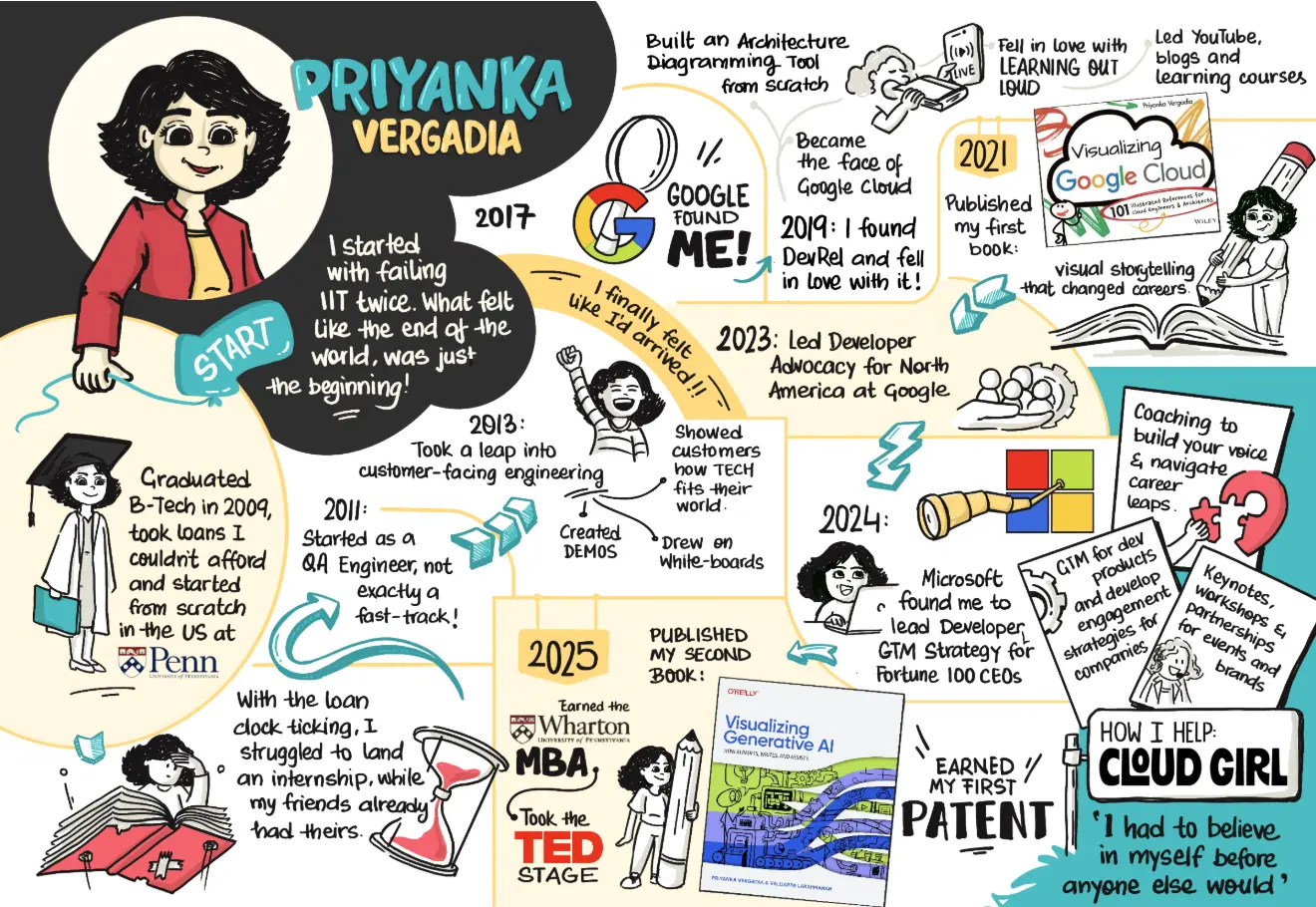
Who I am
Developers (and humans) think visually — I speak their language fluently. I turn abstract tech concepts into compelling visual narratives that drive understanding and action. When complex becomes clear, adoption follows.
With 15+ years in Big Tech and teaching, I craft engagement strategies that drive business growth — transforming complex AI and cloud concepts into clear, actionable content developers actually use.
What I offer
Pick a path — each links straight to its booking or contact flow
1:1 sessions for builders and teams navigating their cloud journey
Book a Session →
Keynotes, panels & workshops at conferences worldwide
Sponsored content & collaborations with developer-first brands
Visual library
Cloud concepts drawn out — browse by topic
Data Science in Google Cloud
Data Science ML/AI
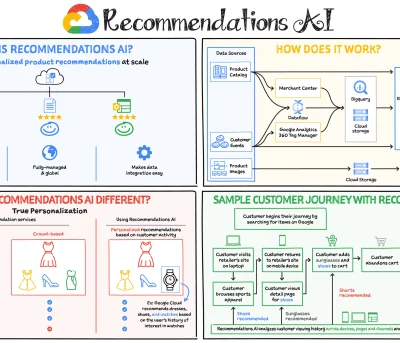
Recommendations AI
Data Science ML/AI
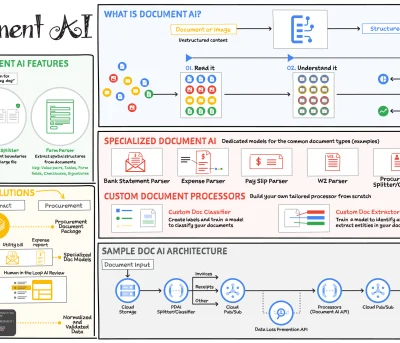
Document AI
Data Science ML/AI
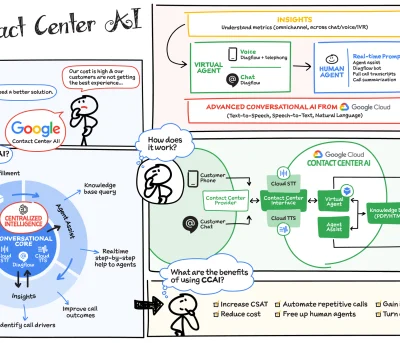
Contact Center AI
Data Science ML/AI
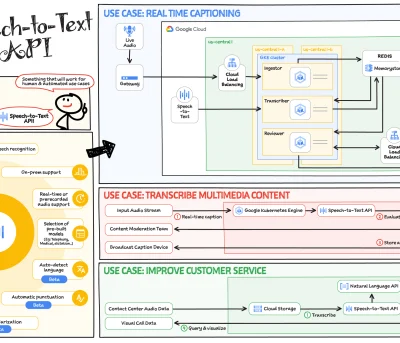
Speech to Text API
Data Science ML/AI
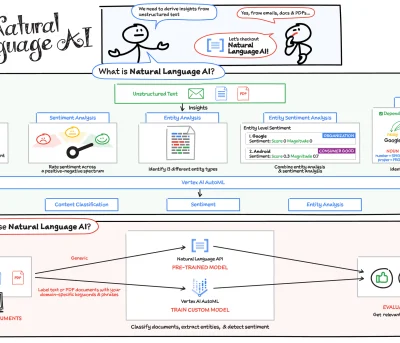
Natural Language AI
Data Science ML/AI
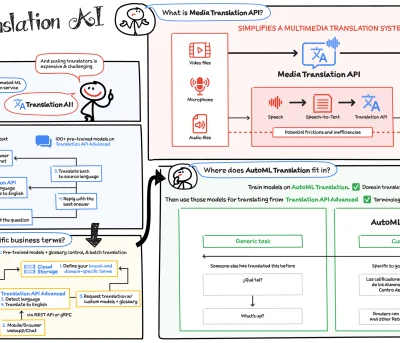
Translation AI
Data Science ML/AI
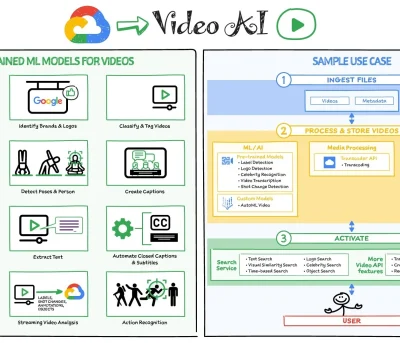
Video AI
Data Science ML/AI
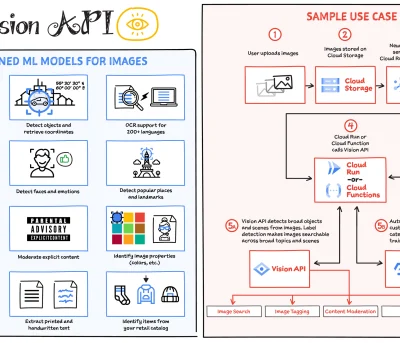
Vision API
Data Science ML/AI
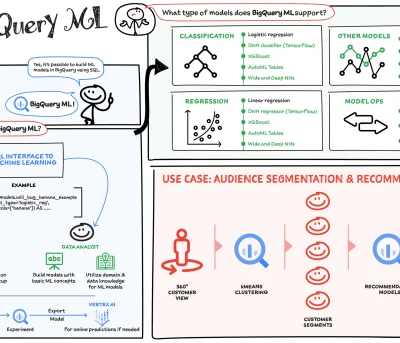
BigQuery ML
Data Science ML/AI
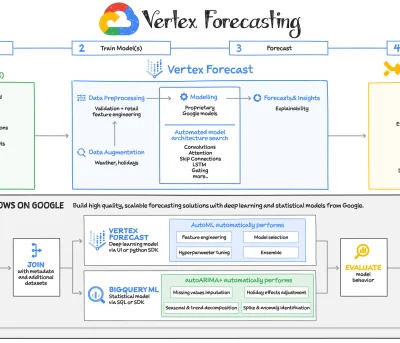
Vertex Forecasting
Data Science ML/AI
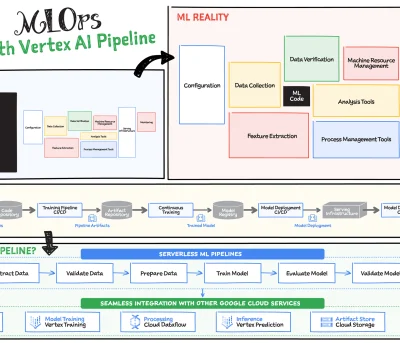
MLOps
Data Science ML/AI
AutoML Models
Data Science ML/AI
Vertex AI
Data Science ML/AI
AI/ML Path
Data Science ML/AI
Intro to Data Science
Data Science ML/AIBreaking Down a Web App: Essential Components
Every web application relies on a foundation of key building blocks:
Application Architecture
Application ModernizationImagine this: You suspect an issue with your cloud deployment, potentially impacting users. But you're stuck sifting through a sea of different monitoring tools to pinpoint the problem. Frustrating, right?
Introducing Google Cloud's Operations Suite: Your One-Stop Monitoring Shop
Google Cloud's operations suite eliminates the need for juggling multiple monitoring tools. It offers a unified platform to:
Cloud Operations
Application ModernizationAPIs are the building blocks of today's modern applications, fueling innovation and collaboration across businesses. They empower companies to:
However, managing APIs securely and efficiently across complex environments – on-premise, private/public cloud, SaaS, and more – can be a challenge. This is where API management comes in.
Introducing API Management: Simplifying the API Landscape
Imagine you have a complex backend with various services – REST/SOAP, microservices, and third-party integrations. You also have diverse consumers – partners, employees, and customers – all relying on APIs to access or manipulate data.
API management helps bridge this gap by:
Unlocking the Value of APIs
Developers can leverage API management to:
API Management
Application ModernizationMicroservices: Power and Coordination
Moving from monolithic applications to microservices brings significant advantages like reusability, scalability, and simpler modifications. However, these independent services need to communicate to solve complex business problems. This is where event-driven architectures come in.
Event-Driven Communication: Two Key Approaches
Event-driven architectures enable microservices to communicate by exchanging messages about events that occur within each service. There are two main ways to implement this:
Choosing the right approach depends on your specific needs and the complexity of your microservices interactions.
Service Orchestration
Application ModernizationThe tech landscape has evolved rapidly, introducing game-changers like containerization, container orchestration, and serverless services. These advancements empower you to develop distributed applications based on microservices architectures, offering:
What are Microservices?
Microservices architecture breaks down large applications into smaller, independent services. Each service owns a specific function, and microservices applications combine these services to deliver complete user experiences.
Containers: Perfect Partners for Microservices
Containers provide a lightweight and isolated environment for each microservice, allowing developers to focus on service logic without worrying about dependency conflicts. Modern cloud-native applications often leverage containers and microservices together.
Deploying Microservices on Google Cloud
Google Cloud offers seamless deployment options for your microservices:
Beyond Deployment: A Rich Ecosystem
Google Cloud offers a comprehensive suite of services that integrate with your microservices architecture, including Cloud SQL and various other tools to support your specific needs.
Mciroservices Architecture
Application ModernizationStreamline Development with CI/CD
Imagine a world where catching bugs is a breeze and deployments are smooth sailing. That's the power of CI/CD.
Benefits of CI/CD:
Devops CI/CD
Application ModernizationAnthos is a game-changer for managing applications across hybrid and multicloud environments. It extends Google Cloud's services and best practices to your existing infrastructure, allowing you to:
Unlocking Flexibility with Deployment Options:
Anthos offers a variety of deployment options to fit your specific needs:
Hybrid and Multicloud Deployments
Application ModernizationThe cloud landscape is vast, with applications scattered across data centers, public clouds, and the edge. These applications often run on unique technology stacks, creating a development and management nightmare. Here's how this translates into challenges:
Introducing Anthos: Your Multicloud Management Hero
Anthos offers a solution by providing a consistent platform for managing applications across hybrid and multicloud environments. It eliminates the complexities of traditional deployments, allowing you to:
Anthos
Application ModernizationA successful application migration to the cloud starts with understanding where you are. Here's how to plan a winning strategy:
Migration Journey
Application ModernizationSo you've decided to leverage the cloud for your next application – a smart move! But before diving in, there are a few key questions to consider, as they'll shape your entire development process and the tools you'll need:
These initial choices will determine the most suitable cloud deployment strategy for your project. Let's explore each option in more detail to help you pick the right fit!
Applicaton Developement & Modernization
Application Modernization
Google Cloud Security Controls
Security
Security Monitoring
Security
Zero Trust & Beyond Cap
Security
Identity and Access Management
Security
Data Loss Prevention
Security
Data Security
Security
Secure Software Development Lifecycle
Security
Network and Application Security
Security
Infrastructure Security
Security
Intro to Cloud Security
Security
Networking Overview
Networking
Service Directory
Networking
Traffic Director
Networking
Network Intelligence Center
Networking
Cloud NAT
Networking
Cloud CDN
Networking
Cloud Load Balancing
Networking
Cloud DNS
Networking
What is VPC Network
Networking
Network Connectivity Options
Networking
Network Service Tiers
Networking
Cloud Networking
NetworkingPicking the perfect database for your application depends on its function: handling transactions, analyzing data, storing data in-memory, and so on. Here's a breakdown of Google Cloud databases we covered earlier, highlighting their strengths and ideal uses:
Relational Databases:
Non-relational Databases:
Choosing the Right Google Cloud Database: A Quick Guide
DatabaseUnlocking Real-Time Performance with MemoryStore
Today's applications, from social media to gaming, rely on lightning-fast data processing for smooth, real-time experiences. That's where in-memory data stores come in. Memorystore offers a fully managed solution for Redis and Memcached, two of the most popular in-memory data store services.
What is MemoryStore?
Imagine a super-powered cache that stores frequently accessed data in memory, dramatically speeding up retrieval. That's Memorystore! It takes care of all the complex tasks like setup, scaling, backups, and security, freeing you to focus on building amazing applications.
Benefits of MemoryStore:
Memorystore for Redis: Powering Diverse Use Cases
Memorystore for Redis goes beyond caching. It acts as a highly available key-value store, perfect for various applications:
MemoryStore
DatabaseNeed Speed and Scale for Your Application? Cloud Bigtable Delivers
Building an application that demands lightning-fast performance and the ability to handle massive amounts of data? Look no further than Cloud Bigtable.
What is Cloud Bigtable?
Cloud Bigtable is a fully managed NoSQL database built for extreme speed and scalability. It's specifically designed to:
Seamless Integration:
Cloud Bigtable
DatabaseBuilding Apps Faster: Say Goodbye to Backend Headaches with Firestore
Ever wonder why new features take so long to launch? Complex backend services can slow development down. Firestore cuts through that complexity by offering a complete Backend-as-a-Service (BaaS) solution. Think of it as a magic glue that seamlessly connects Google Cloud's backend power, Firebase's in-app services, and popular UI frameworks – all managed by Google. This frees your team to focus on what matters: building amazing features.
What Makes Firestore Special?
Firestore
DatabaseIntroducing Cloud Spanner: The Best of Both Worlds for Your Database
In today's application landscape, powerful databases are the backbone of success. Cloud Spanner takes the game to the next level. Here's why:
Cloud Spanner
DatabaseBuilding an App? Cloud SQL Has Your Database Covered
Need a reliable relational database for your application, especially for transactions? Look no further than Cloud SQL. It's a fully managed service that takes care of everything from setup to maintenance, so you can focus on building great applications.
Here's what Cloud SQL offers:
CloudSQL
DatabaseBehind the Scenes: Choosing the Right Database for Your App
Databases are the hidden libraries of your applications, storing information for easy retrieval. Imagine an online store – product details you see are stored in a database and displayed when you request them. But there are two main types of databases, each suited for different situations:
Introduction to Database
Database
Data Catalog
Data-AnalyticsData is generated in real-time from websites, mobile apps, IoT devices,and other workloads. Capturing, processing and analyzing this data is a priority for all businesses. But, data from these systems is not often in the format that is conducive for analysis or for effective use, by downstream systems. That’s where Dataflow comes in! Dataflow is used for processing & enriching batch or stream data for use cases such as analysis, machine learning or data warehousing.
Dataflow is a serverless, fast and cost-effective service that supports both stream and batch processing. It provides portability with processing jobs written using the open source Apache Beam libraries and removes operational overhead from your data engineering teams by automating the infrastructure provisioning and cluster management.
DataFlow
Data-AnalyticsOn-premise Hadoop and Spark environments can be expensive, require constant attention, and slow down your data analysis. Dataproc offers a better way.
Dataproc: Your Managed Spark & Hadoop Solution
Dataproc is a fully managed Apache Spark and Hadoop service on Google Cloud. It eliminates the burden of manual cluster management, freeing you to focus on what matters: extracting insights from your data.
Dataproc Benefits:
Tired of Costly, Time-Consuming Hadoop and Spark Management?
Data-AnalyticsMany companies struggle with data scattered across various applications, creating isolated "silos." This siloed data becomes outdated quickly because merging it for analysis is a time-consuming process. By the time you have a complete picture, the data itself might be old news.
Here's how data silos hinder your organization:
The Solution: Centralized Data Storage
Companies can overcome these challenges by centralizing their data in a modern data store – like a database, data warehouse, or data lake. This offers several advantages:
By breaking free from data silos and centralizing your information, you can unlock the true potential of your data, enabling faster, more informed decision-making.
Look! Its Looker
Data-AnalyticsThe ever-growing mountain of data can leave businesses struggling to extract valuable insights. Complex and inflexible data architectures often hinder progress.
Introducing Datastream: Streamlining Change Data Capture
Change data capture (CDC) and change streaming are revolutionizing data architectures. Datastream, Google Cloud's new serverless CDC and replication service, empowers you to:
Seamless Integration: Datastream integrates seamlessly with Google Cloud's data integration suite. Leverage Dataflow templates to load data into BigQuery, Cloud Spanner, and Cloud SQL, or use Cloud Data Fusion's CDC Replicator connectors for simplified data pipelining.
Unlock Real-Time Insights: Replicate and synchronize data across diverse databases and applications with minimal latency, keeping your analytics fresh and insights up-to-date.
Embrace Stream Processing: Unleash the power of data streams for real-time analytics, database replication, cloud migration, and event-driven architectures across hybrid environments.
Focus on What Matters: The serverless architecture eliminates infrastructure management, scaling, and performance tuning headaches. You can focus on what truly matters – deriving insights and making data-driven decisions.
Datastream
Data-AnalyticsData analysis often gets bogged down by scattered data in various formats. Before you can even start gleaning insights, countless integrations become necessary.
Cloud Data Fusion: Your All-in-One Data Integration Solution
Cloud Data Fusion simplifies enterprise data integration by offering a one-stop shop for all your needs. It handles:
Built for Ease and Efficiency
Cloud Data Fusion empowers various teams:
Embrace Cloud-Native Flexibility
Taming Your Data Chaos: Introducing Cloud Data Fusion
Data-AnalyticsData pipelines are the workhorses of data analysis, but managing and scheduling them can be a hassle. Cloud Composer is here to streamline the process.
Cloud Composer: Your Managed Airflow Solution
Cloud Composer is a fully-managed workflow orchestration service built on Apache Airflow. It empowers you to:
Focus on Your Data, Not Infrastructure
With Cloud Composer, you can ditch the complexities of managing your own Airflow instance. Google Cloud handles:
Built for Scalability and Efficiency
Cloud Composer
Data-AnalyticsMicroservices are great for speeding up development and improving code quality. But as your service network grows, complex communication can slow things down. Integrating new teams becomes a meeting marathon, and scalability suffers.
Introducing Async Communication with Pub/Sub
The answer lies in asynchronous communication. Services can "publish" events to a central messaging system, and other services can "subscribe" to listen for those events. This decouples services, making them independent and highly scalable.
Enter Pub/Sub: Your Messaging Powerhouse
Pub/Sub is Google Cloud's fully managed messaging service that offers two flavors:
Cloud Pub/Sub
Data-AnalyticsImagine having all your organization's data in one place, ready for analysis at a massive scale. That's the power of BigQuery, Google Cloud's enterprise data warehouse.
Effortless Data Aggregation:
BigQuery simplifies data warehousing by automatically collecting information from various sources. No more struggling to piece together data from different systems – BigQuery handles it all.
Real-Time Insights, Streamlined:
Need insights in the blink of an eye? BigQuery lets you ingest data in real-time, so you can react to changing trends and make data-driven decisions faster. Whether you choose batch uploads or live streaming, BigQuery delivers the flexibility you need.
Focus on Analysis, Not Infrastructure:
BigQuery is a fully managed service, meaning Google takes care of the complex infrastructure behind the scenes. This frees you to focus on what matters most – analyzing your data.
Familiar Tools, Powerful Results:
BigQuery uses SQL, a widely used language for querying databases. If you've used relational databases before, you'll be comfortable querying your data in BigQuery to uncover valuable insights, even for datasets reaching petabytes in size.
BigQuery: Unleash the Power of Your Data
Data-Analytics
Building a data analytics pipeline is like creating an assembly line for your insights. Here’s a breakdown of the key steps, along with the Google Cloud tools that can help you at each stage:
Data-AnalyticsChoosing the right storage for your application depends on what you need it to do. Google Cloud offers a variety of options across three main storage types: object storage, block storage, and file storage. Here's a breakdown to help you pick the perfect fit:
Object Storage: Your Data Vault in the Cloud (Cloud Storage)
Block Storage: High-Performance Building Blocks (Persistent Disk & Local SSD)
File Storage: Sharing Made Easy (Filestore)
Picking the Perfect Storage for Your Cloud Applications
StorageVirtual machines are great, but what happens to your data when they restart? Persistent Disk solves this by providing reliable storage that persists even after a reboot.
Think of it like this: Imagine your virtual machine is a powerful computer, but it doesn't have built-in storage. Persistent Disk acts like an external hard drive that you can attach to your VM. This disk uses SSDs for speed or HDDs for cost-effectiveness, depending on your needs.
Choosing the Right Disk:
Just like choosing a car, there's a Persistent Disk type for every need:
Availability Matters:
What is Persistent Disk?
StorageEffortless File Sharing for Your Cloud Applications. Filestore is your one-stop shop for managing and sharing files in the cloud. It takes care of everything behind the scenes, so you can focus on what matters – your applications.
Key benefits of Filestore:
With Filestore, you can ditch complex file management and focus on building great applications.
What is Filestore?
StorageThere are many reasons to migrate your data to Google Cloud, including:
No matter the reason, when moving data, these factors are crucial:
Google Cloud: Your One-Stop Data Transfer Shop
Google Cloud offers a variety of tools to fit your specific needs and data size:
With Google Cloud's data transfer solutions, you can move your data securely, efficiently, and at a pace that fits your needs.
Why Move Your Data to Google Cloud?
StorageSecure, Scalable Home for All Your Data. Cloud Storage is your one-stop shop for storing all sorts of digital files – images, videos, documents, and more. It's designed for massive scale, keeping your data secure and accessible wherever you need it.
What Makes Cloud Storage Special?
With its flexibility and robust features, Cloud Storage is a perfect fit for a wide range of applications, from web servers to data analysis tools.
What is Google Cloud Storage?
StorageMoving to the Cloud, But Your Specialized Workloads Need a Lift? Many businesses are moving to the cloud for its flexibility and ease of management. But what about those critical applications with specific needs, like Oracle databases? Complex licensing, hardware requirements, and support agreements can make migrating them a challenge.
Bare Metal Solution offers a bridge to the cloud for these specialized workloads. It lets you leverage the benefits of Google Cloud while still using your existing hardware and architecture. This translates to:
What is Bare Metal Solution?
ComputeRun Your VMware Workloads Seamlessly in the Cloud. Have existing VMware applications and want the benefits of the cloud? Google Cloud VMware Engine lets you migrate your workloads to Google Cloud without needing to change a thing. It provides a fully managed service with dedicated infrastructure, keeping your environment secure and isolated.
This means:
What is VMware engine?
ComputeCode on Demand, No Servers Required. Cloud Functions lets you ditch server management altogether. This event-driven service runs your code only when specific things happen, like a file upload or a database change.
Here's what makes Cloud Functions so useful:
With Cloud Functions, you can create event-driven applications without ever having to manage a server. Just write the code, and let Google handle the rest.
What is Cloud Functions?
ComputeApp Engine is a Google Cloud service that lets you develop and deploy applications without worrying about server management. App Engine is fully-managed serverless compute to build low latency high scalable applications. and deploy l It takes care of everything from infrastructure setup to scaling your app to meet any demand, from a handful of users to millions.
Build and Scale Your Apps Effortlessly with App Engine
ComputeCloud Run makes deploying and running containerized applications a breeze. It takes care of everything behind the scenes, from setting up servers to automatically scaling your app based on demand. No more wrestling with complex cluster configurations or worrying about resource usage when things are quiet.
Here's what makes Cloud Run so powerful:
What is Cloud Run?
ComputeThe sketch compares containers and virtual machines (VMs) for running software. VMs virtualize the entire hardware system, while containers share the host operating system's kernel. This makes containers much lighter and faster to start up than VMs. Containers improve portability, deployment speed, and reusability of applications. Notably, they help avoid the "it worked on my machine" problem by providing a consistent environment.
What is Google Kubernetes Engine?
ComputeGoogle's Compute Engine lets you create custom virtual machines (VMs) to run your applications. You can choose from pre-built VMs with set CPU and memory or create your own with the exact resources you need. This allows you to optimize your resources and costs. If your needs change, you can easily switch your VM to a different size without affecting your workload.
What Is Compute Engine?
ComputeWhat are the different storage types?
Choosing the Right Storage for Your Applications. There are three main categories of data storage applications use: object storage, block storage, and file storage. Each offers unique advantages depending on your needs.
Types of Storage
StorageChoosing the right infrastructure options to run your application is critical, both for the success of your application and for the team that is managing and developing it. This sketch breaks down some of the most important factors that you need to consider when deciding where you should run your stuff. Remember that no decision is necessarily final; you can always move from one option to another but it’s important to consider all the rele- vant factors.
Where Should I run my stuff ?
ComputeLets understand cloud computing models with housing analogy
What is cloud ?
ComputePublished Works
Illustrated & beginner-friendly — cloud concepts that actually stick
Easy-to-follow visual walkthrough of every important part of the Google Cloud Platform
The Google Cloud Platform incorporates dozens of specialized services that enable organizations to offload technological needs onto the cloud. From routine IT operations like storage to sophisticated new capabilities including artificial intelligence and machine learning, the Google Cloud Platform offers enterprises the opportunity to scale and grow efficiently.
In Visualizing Google Cloud: Illustrated References for Cloud Engineers & Architects, Google Cloud expert Priyanka Vergadia delivers a fully illustrated, visual guide to matching the best Google Cloud Platform services to your own unique use cases. After a brief introduction to the major categories of cloud services offered by Google, the author offers approximately 100 solutions divided into eight categories of services included in Google Cloud Platform: Compute, Storage, Databases, Data Analytics, Data Science, Machine Learning and Artificial Intelligence, Application Development and Modernization with Containers, Networking andSecurity
You’ll find richly illustrated flowcharts and decision diagrams with straightforward explanations in each category, making it easy to adopt and adapt Google’s cloud services to your use cases. With coverage of the major categories of cloud models―including infrastructure-, containers-, platforms-, functions-, and serverless―and discussions of storage types, databases and Machine Learning choices, Visualizing Google Cloud: Illustrated References for Cloud Engineers & Architects is perfect for every Google Cloud enthusiast, of course. It is for anyone who is planning a cloud migration or new cloud deployment. It is for anyone preparing for cloud certification, and for anyone looking to make the most of Google Cloud. It is for cloud solutions architects, IT decision-makers, and cloud data and ML engineers. In short, this book is for YOU.
Click to read description
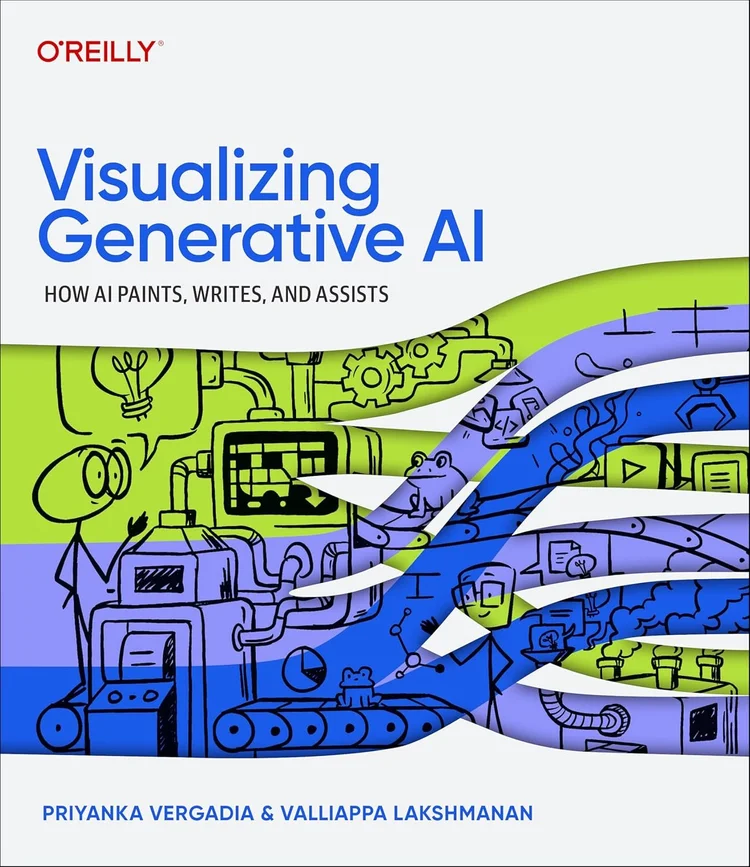
Generative AI has the potential to innovate and evolve business processes, but workers are still figuring out how to build with, optimize, and prompt GenAI tools to fit their needs. And of course, there are pitfalls to avoid, like security risks and hallucinations. Getting it right requires an intuitive understanding of the technology's capabilities and limitations. This approachable guidebook helps learners of all levels navigate GenAI—and have fun while doing it.
Loaded with insightful diagrams and illustrations, Visualizing Generative AI is the perfect entry point for curious IT professionals, business leaders who want to stay on top of the latest technologies, students exploring careers in cloud computing and AI, and anyone else interested in getting started with GenAI. You'll traverse the generative AI landscape, exploring everything from how this technology works to the ways organizations are already putting it to work to great success.
Click to read description
Shop
Courses, mentorship & Cloud Girl merch
Visit store →
Watch & Learn
Read & Explore
Deep dives on cloud, AI & visual storytelling — no jargon
Read all articles →Recent posts & reels
Cloud concepts, visual storytelling & behind the scenes
View profile →
Listen & Watch
Kind words
From conference organizers, mentees & brand partners
Priyanka has a rare gift: she makes the hardest cloud concepts feel effortless. Her keynote at our conference left the audience asking for more — and our NPS scores have never been higher.
Tobias K.
Platform Engineer, Spotify
Priyanka’s visual explainers on Kubernetes and cloud networking are the best I’ve found anywhere. My entire team has bookmarked them. She makes you feel smart, not small.
Tobias K.
Platform Engineer, Spotify
Working with Priyanka on our brand campaign was a joy from start to finish. She understood our audience instantly and delivered content that felt authentic — not just sponsored.
Marcus D.
VP Marketing, Weaviate
Priyanka has a rare gift: she makes the hardest cloud concepts feel effortless. Her keynote at our conference left the audience asking for more — and our NPS scores have never been higher.
Sarah Chen
Head of Developer Relations, Google Cloud
Recent articles on Substack
Deep dives on cloud, AI & visual storytelling — no jargon
Read all articles →Your cart is empty.
Start Shopping
Interested in working with me? Fill out some info and my team will be in touch shortly! Can't wait to hear from you and build something amazing together!
Or connect directly via pvergadia@gmail.com
Interested in becoming a sponsor? Fill out some info and we will be in touch shortly! We can't wait to hear from you!
Or connect directly via pvergadia@gmail.com