Traditional AI vs Generative AI vs Agentic AI
AI's Evolution: From Recipes to Robots (and Beyond!) 🤖✨
Have you ever wondered if all AI is the same? It's easy to get confused with all the tech talk! Think of AI like a big, diverse family, with different members having unique superpowers. Let's break down the three main types you're hearing about today: Traditional, Generative, and Agentic AI, so you can tell them apart like a pro!
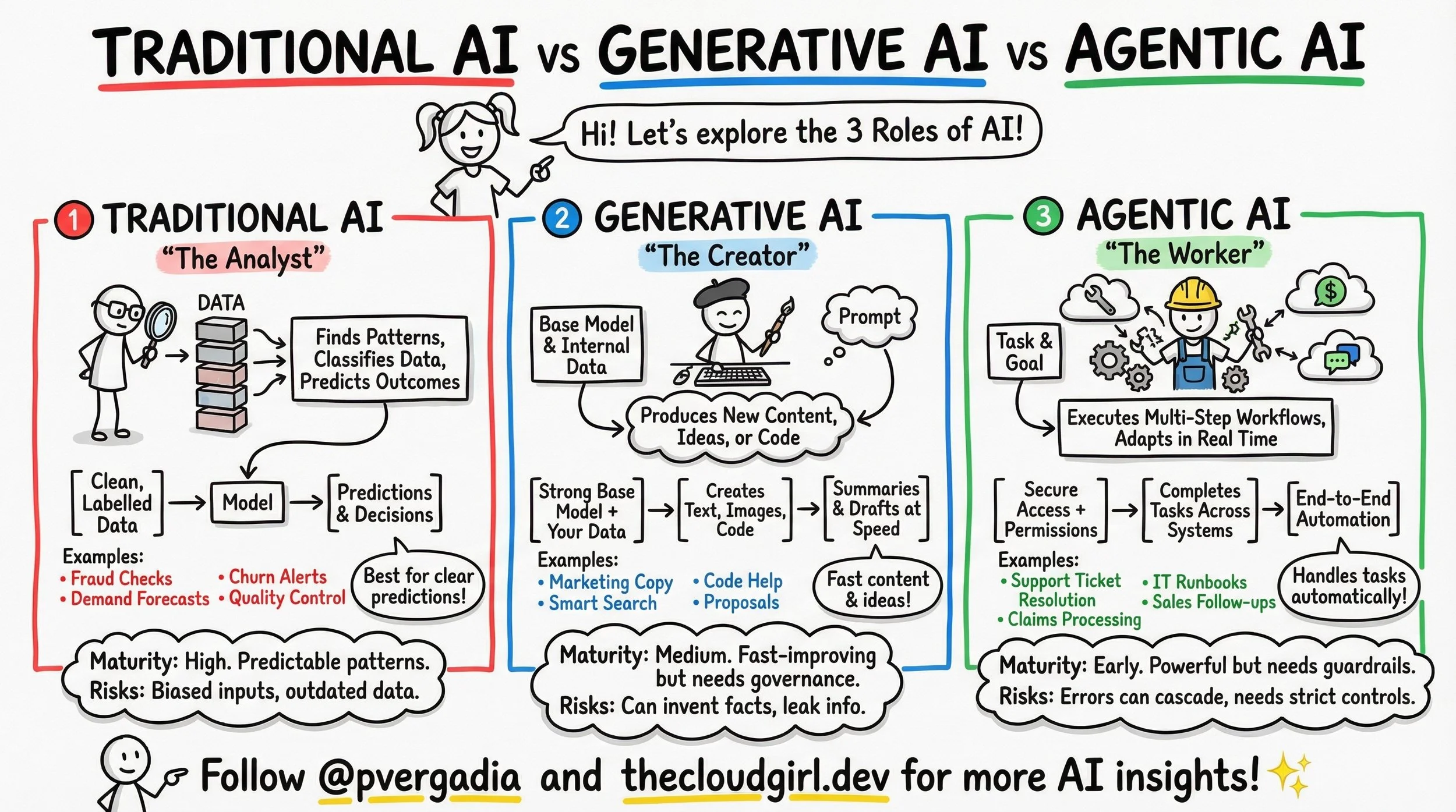
Traditional AI vs Generative AI vs Agentic AI
Key Takeaways:
Traditional AI (The Rule Follower): Imagine a super-smart vending machine! This AI is brilliant at following exact rules and instructions to do very specific tasks. It knows exactly what to do when X happens (like checking a credit card for fraud patterns or playing chess). It's amazing for problems with clear, defined steps, but it can't invent new things or think outside its instruction book.
Generative AI (The Creative Storyteller): This is the AI that can write poems, draw pictures, or even compose music! Think of it like a highly imaginative artist who's seen millions of examples. Instead of following strict rules, it learns patterns from vast amounts of data and uses those patterns to *create* brand new, original content that looks and sounds real. It predicts what should come next, making magic appear!
Agentic AI (The Goal Achiever): Picture a super-efficient personal assistant! An Agentic AI doesn't just generate text or follow rules; it has a goal and actively works to achieve it. It can plan steps, use various "tools" (like searching the internet, sending emails, or running code), observe the results, and adapt its strategy until the job is done. It's about proactive problem-solving and taking action!
Conclusion:
So, there you have it! From rule-following calculators to creative artists and proactive assistants, AI is evolving rapidly. Each type brings unique strengths to the table, helping us solve different kinds of problems. The next time you hear about AI, you'll know exactly which family member they're talking about! Check out the accompanying sketchnote for a visual guide!