Month: September 2025

Uncategorized

Why Spec-Driven Development is the Future of AI Coding

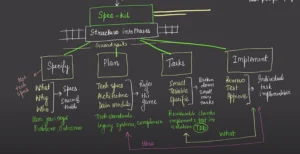
Why Spec-Driven Development is the Future of AI CodingWritten By Priyanka VergadiaWe're living through an incredible moment where AI can write decent code and build entire applications in minutes. But while everyone's obsessing over better prompts and flashier demos, most developers are missing the real game-changer: specifications.The harsh reality? AI coding often feels like a beautiful, chaotic dance where you end up debugging code you didn't write, playing endless rounds of "prompt tennis" with your AI assistant. After 47 prompts, you're thinking, "I could have built this myself in half the time."There's a better way. GitHub's new open-source tool SpecKit is bringing spec-driven development to the forefront of AI coding—and it's exactly what we need. Here is a video I did recently on this topic showing a demo. The Problem with "Vibe Coding"When you throw a vague prompt like "build me a React to-do app with drag and drop, local storage, and dark mode" at your AI assistant, you're essentially asking it to be a mind reader. You give it a high-level idea and expect it to somehow know:All the implementation detailsEdge cases you haven't thought ofYour preferred architecture patternsYour exact requirements and constraintsIt's like walking into a coffee shop and saying "I want something caffeinated that tastes good," then expecting the barista to nail your exact preference for a medium roast oat milk cortado with a dash of cinnamon.AI is incredible at following instructions, but terrible at filling in the massive gaps we leave.Enter Spec-Driven DevelopmentSpec-driven development flips the script entirely. Instead of specifications being just scaffolding you build and discard, they become executable blueprints that directly generate working implementations. The spec isn't documentation anymore—it's the blueprint that builds your software.What is Spec-kit?SpecKit structures this approach into four clear phases that act as guardrails for both you and your AI:Phase 1: SpecifyDescribe not just what you want to build, but why you're building it and who it's for. This creates a detailed specification document that becomes your single source of truth.Focus on:User journeys and experiencesWho will use this app?What problems does it solve?How will users interact with it?What does success look like?Phase 2: PlanGet technical. Define your tech stack, architectural decisions, and data models. Set the rules of the game before the AI starts playing.Include:Technology standards and constraintsIntegration requirementsPerformance targetsCompliance needsMultiple plan variations to compare approachesPhase 3: Break Down TasksInstead of one giant "build me an app" prompt, you get a prioritized list of small, testable, specific tasks. Each task is focused enough that the AI can nail it in one shot with minimal debugging.Transform vague requests like "build authentication" into concrete tasks like "create a user registration endpoint that validates email format."Phase 4: ImplementThe AI works through each task individually. You review, test, and approve each piece before moving on. Instead of reviewing thousands of lines of code dumps, you review focused changes that solve specific problems.The AI knows:What to build (from the specification)How to build it (from the plan)Exactly what to work on (from the tasks)Why This Actually WorksThis approach succeeds where pure prompting fails because it addresses a fundamental truth about language models: they're exceptional at pattern completion but terrible at mind reading.When you provide clear specifications, technical plans, and focused tasks, you're giving the AI actual clarity instead of forcing it to guess. Instead of mind-reading your intent, it has concrete direction.Use Cases1. Greenfield ProjectsStarting something completely new? Spend time creating a spec and plan upfront to ensure the AI builds what you actually intend, not just some generic solution based on common patterns.2. Feature Work in Existing ProjectsThis is where spec-driven development becomes incredibly powerful. Adding features to complex existing codebases is hard, but creating a spec forces clarity on how new features should interact with everything already there.3. Legacy ModernizationWhen rebuilding legacy systems where original intent is lost to time, you can capture essential business logic in a modern spec, design fresh architecture in the plan, and let AI rebuild without carrying forward technical debt.The Bottom LineIf you're tired of playing prompt roulette with your AI coding assistant, spec-driven development offers a structured path forward. SpecKit is completely open-source and ready to use right now with GitHub Copilot, Claude Code, Gemini, and Cursor.The future of AI coding isn't just about better prompts—it's about better specifications. When we give AI the clarity it needs, it can finally deliver on its promise of truly collaborative development.Stop asking AI to read your mind. Start giving it the blueprints it needs to build exactly what you envision.

Read more »

Uncategorized

Vertical AI is the New SaaS

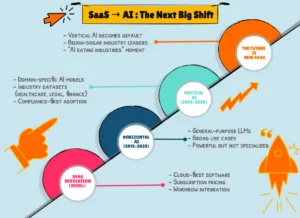
Vertical AI is the New SaaSSep 3 Written By Akhil MohanHow industry-specific AI is reshaping enterprise software just like SaaS transformed computing two decades agoTwenty years ago, I witnessed the SaaS revolution firsthand. Companies were struggling with expensive on-premise software deployments, complex maintenance cycles, and rigid licensing models. Then came Salesforce, Workday, and ServiceNow—not just offering better software, but fundamentally reimagining how businesses consume technology. They didn't just digitize existing processes; they created entirely new paradigms around subscription models, cloud-native architectures, and continuous delivery.Today, we're standing at a similar inflection point with Artificial Intelligence. But this time, the transformation isn't about moving from desktop to cloud—it's about moving from horizontal, general-purpose AI to Vertical AI: purpose-built intelligent systems designed for specific industries and workflows.The Horizontal AI Foundation: Necessary but Not SufficientThe current AI landscape is dominated by horizontal platforms—ChatGPT, Claude, Gemini, and their enterprise variants. These models are remarkable achievements, capable of reasoning across domains, generating content, and solving problems with unprecedented sophistication. They've democratized access to AI capabilities and proven the transformative potential of large language models.However, much like the early days of computing when we had powerful but generic mainframes, horizontal AI faces inherent limitations when applied to specialized enterprise use cases:Data Limitations: General models are trained on publicly available internet data, missing the proprietary datasets that drive real business value—medical records, legal precedents, financial transactions, manufacturing telemetry.Compliance Gaps: Industries like healthcare (HIPAA), finance (SOX, GDPR), and legal services operate under strict regulatory frameworks that generic AI models weren't designed to navigate.Workflow Friction: Horizontal AI requires users to adapt their processes to the tool, rather than embedding intelligence seamlessly into existing professional workflows.Limited Context: Without deep domain knowledge, even the most sophisticated general models struggle with industry-specific nuances, terminology, and decision-making frameworks.Vertical AI is the New SaaSWhat is Vertical AI RevolutionVertical AI represents the natural evolution beyond horizontal platforms—AI systems built from the ground up for specific industries, trained on domain-specific datasets, and designed to integrate natively into professional workflows. The market data strongly supports the rising importance of vertical AI solutions. Vertical AI is on the rise, with this year's vertical winners surpassing the other category winners to capture over $1B in combined funding in 2025 YTD AI 100: The most promising artificial intelligence startups of 2025 - CB Insights Research, according to CB Insights' AI 100 report. The healthcare sector exemplifies this growth trajectory, with the global AI in healthcare market size estimated at USD 26.57 billion in 2024 and projected to reach USD 187.69 billion by 2030, growing at a CAGR of 38.62% AI In Healthcare Market Size, Share | Industry Report, 2030.Key Differentiators of Vertical AI:1. Specialized Training Data While horizontal AI models train on broad internet corpora, Vertical AI systems ingest industry-specific datasets: clinical trial data for healthcare AI, case law databases for legal AI, financial market data for fintech AI. This specialized training creates models that understand industry context, terminology, and decision-making patterns.2. Regulatory Compliance by Design Rather than retrofitting compliance, Vertical AI systems are architected with regulatory requirements as first-class constraints. Healthcare AI models are HIPAA-compliant from inception; financial AI systems are built with SOX controls and audit trails embedded.3. Workflow-Native Integration Instead of requiring users to switch contexts, Vertical AI embeds directly into the tools professionals already use—EMR systems for doctors, case management platforms for lawyers, trading platforms for financial professionals.4. Domain-Specific Performance By focusing on narrow use cases within specific industries, Vertical AI systems can achieve superhuman performance in their domains while maintaining explainability and auditability.

Read more »

Cart

Your cart is empty.

Start Shopping